


The gate was open … reflections of a first time garden opener
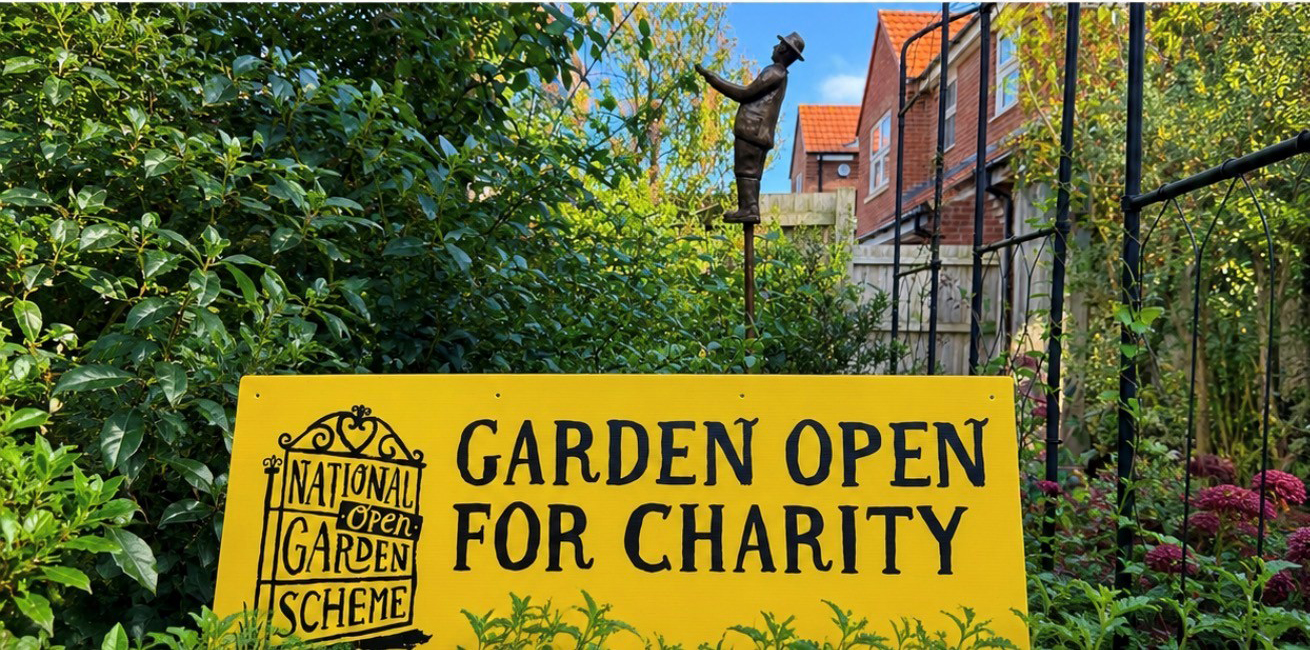
This weekend, I opened my garden for the first time for the National Garden Scheme, writes Andrew Jackson.
For months beforehand I had wondered whether it was enough.
The question sits like a stone in the pockets of almost everyone who gardens in a small space. Is it too little? Too ordinary? Too new? Too suburban? Will people travel to see a garden at the end of a road on a modern housing estate, with neighbours’ roofs pressing close and the sound of children playing in the street?
We have become accustomed to thinking of gardens in terms of superlatives. The great gardens are large, old and layered with history. They have ancient trees, sweeping lawns and heroic herbaceous borders. We visit them and are inspired by them. They matter enormously.
But gardening in Britain is not done in great estates.
It is done in places like this.
It is done in gardens no larger than a handkerchief, behind semi-detached houses and new-build homes. It is done on patios and in tiny plots where the fence is never far away. It is done in gardens made by people fitting an hour of weeding around work and school runs and ageing parents. It is done by those who have inherited nothing but a rectangle of turf and a vision of what it might become.
This was the garden I opened.
Four years ago, it had been a blank canvas, a piece of compacted clay and builder’s rubble. There was no shade, no structure and no sense of belonging. It could have remained a patch of lawn and a trampoline, and nobody would have thought less of it.
Instead, little by little, it became a garden.
A pond appeared, and with it came dragonflies and frogs. Grasses softened the hard boundaries. Perennials spilled into pathways. Self-seeded flowers found their own places. Birds came. Bees came. The whole space became animated by life.
And, perhaps most importantly, it became a place.
That is the great gift of gardening. It turns space into place and ownership into stewardship.
As opening day approached, I wondered whether people would come.
They did.
The gate was opened and they came down the path carrying programmes and questions. They came from villages and towns nearby, but also from all over. They came because they loved gardens. They came because they were curious. Some admitted that they had never visited a new-build estate before.
And then something rather beautiful happened.
Nobody asked how large the garden was.
Nobody measured it against some imagined standard.
Instead, they saw what gardeners always see first. They saw the planting. They looked into the pond and spotted the frogs. They noticed combinations of colour and texture. They asked the names of grasses. They spoke about wildlife and seasons and the problems of dry shade. They recognised plants they grew themselves.
Again and again, people said the same thing.
“I could do this at home.”
I think that sentence may be the most important thing I heard all weekend.
Because this is the hidden power of small gardens. They are relatable. They give permission.
A visitor can admire a vast country garden and leave inspired but overwhelmed. They may never quite believe that they could recreate what they have seen.
But they can stand in a suburban garden and see possibility.
They can look at a pond no larger than a dining table and imagine one of their own. They can see grasses moving in the wind and think of a corner of their patio. They can understand that biodiversity is not an abstract concept but something that can happen in the smallest of spaces.
The conversations we had throughout the day were not about perfection. They were about beginnings.
“I’ve got a new-build garden too.”
“My garden is this size.”
“I’ve been thinking about making a pond.”
“I didn’t know you could grow that.”
This, I realised, was exactly why opening the garden mattered.
The National Garden Scheme is not merely a celebration of beautiful gardens. It is a celebration of gardening itself. It is about generosity and community and the exchange of ideas. It is about saying, “This is what I have made. Come and see. Take what you can from it.”
And if that is true, then small gardens belong at its heart.
Indeed, I would go further. We need more of them.
We need more front gates opening on modern estates. We need more tiny back gardens and postage-stamp plots. We need more first-time gardeners and younger gardeners and people who have created something from almost nothing.
For these are the gardens that represent modern Britain.
Millions of people live in new-build homes. Millions more have small suburban plots. If they do not see themselves represented in our gardening culture, then gardening risks becoming something distant and exclusive, something done by other people in other places.
But gardening has never belonged to an elite. It belongs to everyone.
It belongs to the person planting their first rose beside a new fence. It belongs to the family digging a pond in a tiny garden because their children want frogs. It belongs to the gardener who is learning through trial and error how to coax beauty from clay soil. It belongs to every person who looks at a bare plot and imagines abundance.
Last weekend convinced me of something I had suspected for a long time. People are hungry for authentic gardens.
They want to see places that feel achievable and lived in. They want gardens with muddy edges and experiments and mistakes. They want gardens that are still evolving. They want to see how ordinary spaces can become extraordinary through care and imagination.
And perhaps that is the message I would send to anyone with a small or suburban garden who wonders whether it is worthy of opening.
Open it.
Open it if your borders are still young. Open it if your trees are newly planted. Open it if your pond is only a few years old and your planting has not quite settled. Open it if your garden is no bigger than a sitting room.
Open it because someone will visit and leave inspired.
Open it because someone will think, “I could do this too.”
Open it because your garden tells a story that many people need to hear.
The gate closed at the end of the afternoon and the last visitors drifted away. The garden was quiet again. The birds returned to the pond. Evening light caught the tops of the grasses.
The garden felt changed somehow.
Not because the plants were different, but because it had become part of something larger. It had joined a long tradition of generosity and shared enthusiasm that lies at the heart of British gardening.
And standing there, in a small garden on a modern housing estate, I found myself hoping that next year there will be many more gates opening like ours.
Because the future of British gardening may well lie not behind the walls of great estates, but in these modest spaces, where ordinary people are making places of beauty, refuge and life from the smallest of plots.
Andrew’s garden 1 Wilds Pasture opens by arrangement visits from 30 April to July for groups of between 5 and 15 and as part of the Beverley Gardens Group, East Yorkshire. For details click here.
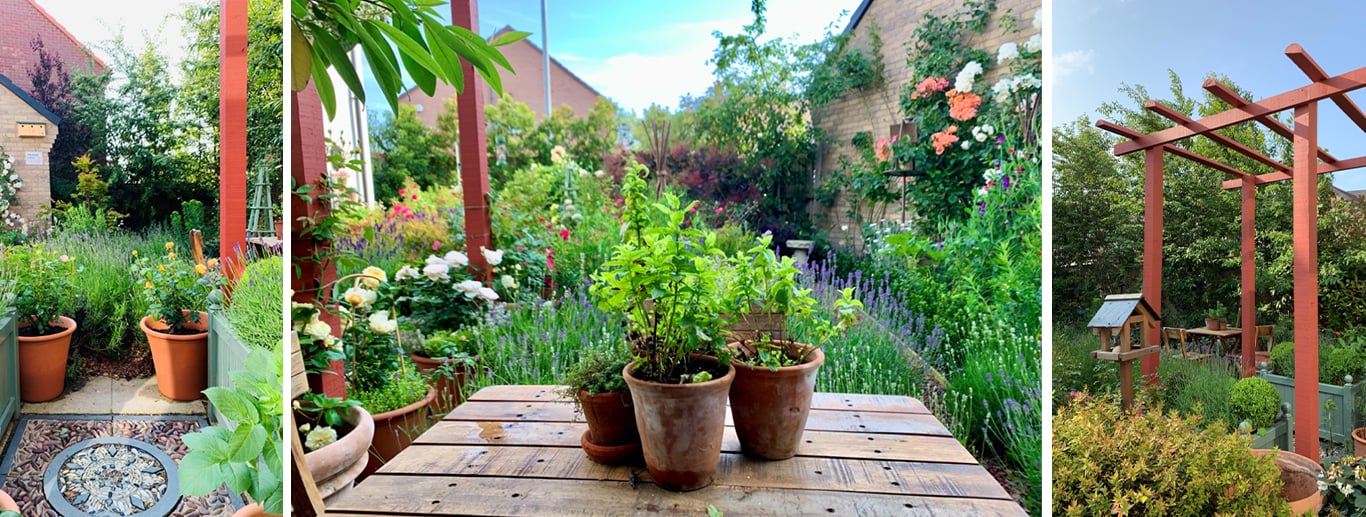
Small gardens often open as part of a village or town group and can also be offered for private visits under the ‘by arrangement’ banner. If you would like to open your garden for the National Garden Scheme CLICK HERE for more information.