



Mansard House: Tom Hoblyn’s climate-resilient sand garden
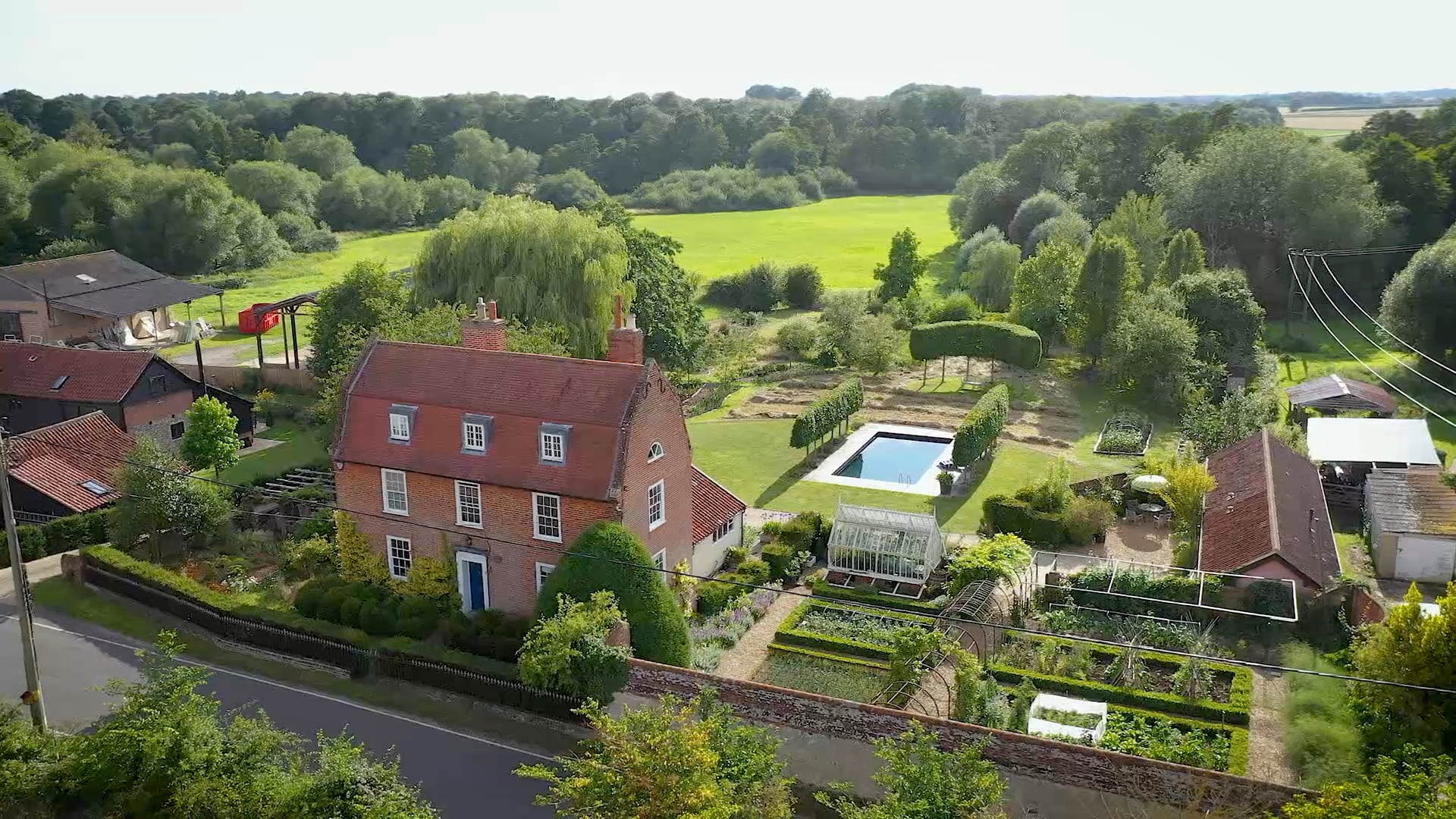
Award-winning garden designer and National Garden Scheme volunteer in Suffolk, Tom Hoblyn explains why he is creating a new sand garden, and how simply introducing a few new plants can help increase biodiversity.
We have created something rather exciting here at Mansard House: a brand spanking new climate-resilient sand garden, with the ambitious goal of establishing as many different plant species as we can possibly cram in, writes Tom Hoblyn. That ambition isn’t just because I love all plants and want as many as possible. It comes from a conviction I’ve held for some time: that the more plant species you grow, the more wildlife you support. It really is that straightforward, and it rather makes one think about one’s responsibilities.
No field in the UK is more than a kilometre from a garden. Think about that for a moment. Farmers are not to blame – they have a job to do – but modern agriculture means fields are largely monocultures, growing a single crop with precious little room for anything else. That leaves wildlife with nowhere much to turn. Our gardens are safe havens, the feeding stations and the corridors that connect what remains of the natural world. Which makes us, whether we like it or not, wildlife custodians. It is a role I find rather wonderful, if one is honest about it.
At Mansard House, this thinking has led me towards plants from the Mediterranean – species that would feel quite at home in the Mediterranean ecosystems like garrigue or the maquis. The reason is straightforward: East Anglia is heading that way. Hotter, drier summers and milder winters are already changing what thrives and what struggles in our gardens, and the trajectory is clear. Rather than fighting it, one might as well embrace the cistus, the salvia, and the thyme – plants that revel in exactly the conditions we are increasingly being dealt, and which bring with them an extraordinary range of flower, structure, and season.
The diversity of plants is still the point: diverse plants mean diverse chemistry, diverse flowering times, and diverse architecture – all of which matter enormously to the insects and birds that depend on our gardens.
The good news is that you don’t need a large garden, a significant budget, or any particular specialist knowledge to make a difference. You just need to grow a little more variety than you did last year. Every new species you introduce opens a door for wildlife that wasn’t there before. One new plant is one new opportunity. Start there and see where it leads.
-
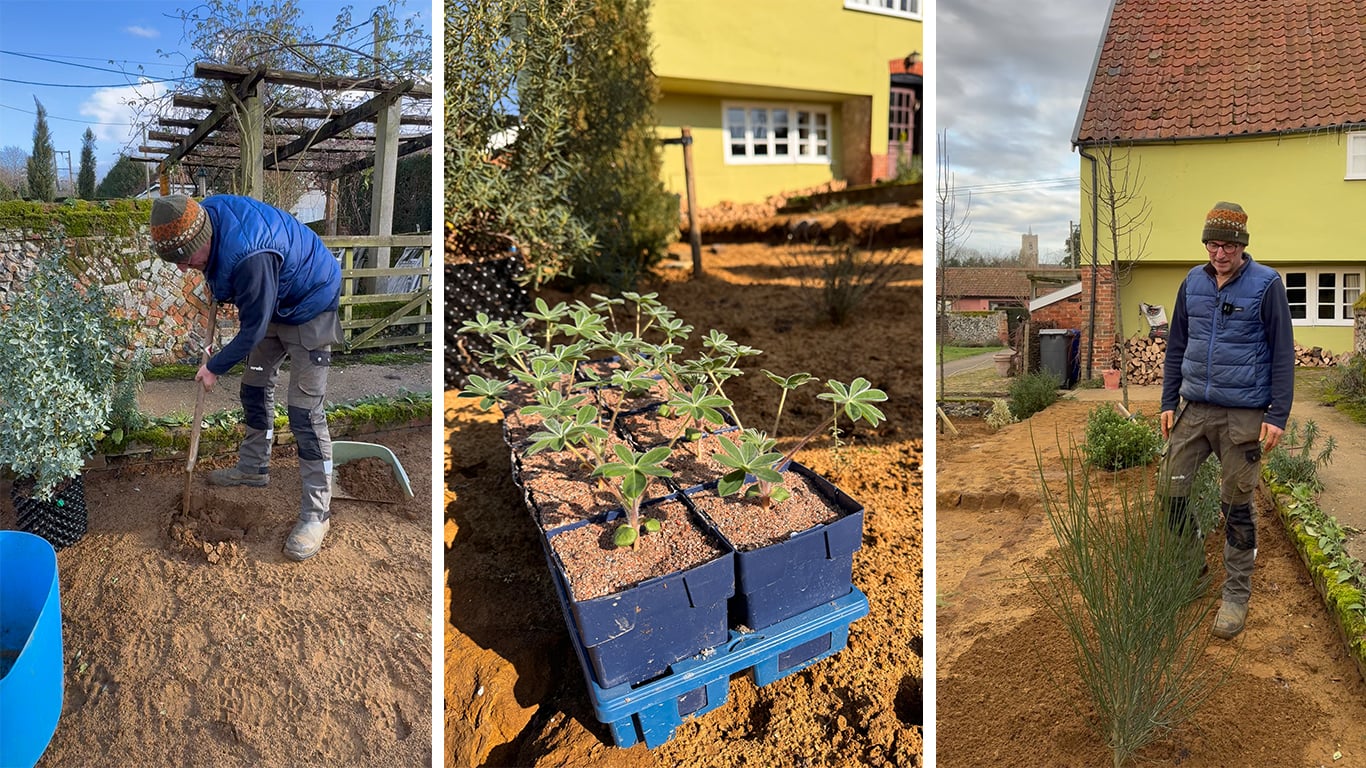
- Tom at work on the garden at Mansard House
Tom’s Top Tips – for a more climate-resilient, wildlife-friendly garden
- Grow more different things. Plant diversity drives wildlife diversity – it really is that simple.
- Consider your climate trajectory. Wherever you garden in the UK, look at what climate change predictions say about your region and let that guide your plant choices – the species that will thrive in twenty years may be quite different from those that thrived twenty years ago.
- Embrace poor soil. Stress-tolerant plants often perform best in low-fertility conditions – resist the urge to feed everything.
- Layer your planting. Tall plants, mid-height plants, ground-huggers, and bulbs together create the complexity that wildlife loves.
- Include bulbs. They occupy space when other plants are dormant, extending the season for wildlife at both ends.
- Let things seed. Annual self-seeders fill gaps, add variety, and provide food for birds.
- Reduce your lawn. Even a small patch of rougher grass supports far more life than a close-mown monocultural sward.
- Think about structure through winter. Seedheads and stems provide habitat and food long after the flowers are gone.
- Edit rather than control. Naturalistic planting needs a light, knowing hand – remove what’s swamping everything else, but let the community find its own rhythm.
- Remember you are a wildlife custodian. Your garden is part of a landscape. What you grow has consequences well beyond your boundary.
Visit Mansard House in Suffolk when it opens for the National Garden Scheme on Monday 25 May, 2026. Click here for details.
If biodiversity is important to you why not be part of our Big British Garden Survey which aims to uncover places where wildlife thrives and identify those areas where more could be done to encourage biodiversity. This important survey will highlight ways that gardeners can make a real difference to the future of our environment. For details click here.