


Creating a biodiversity hotspot
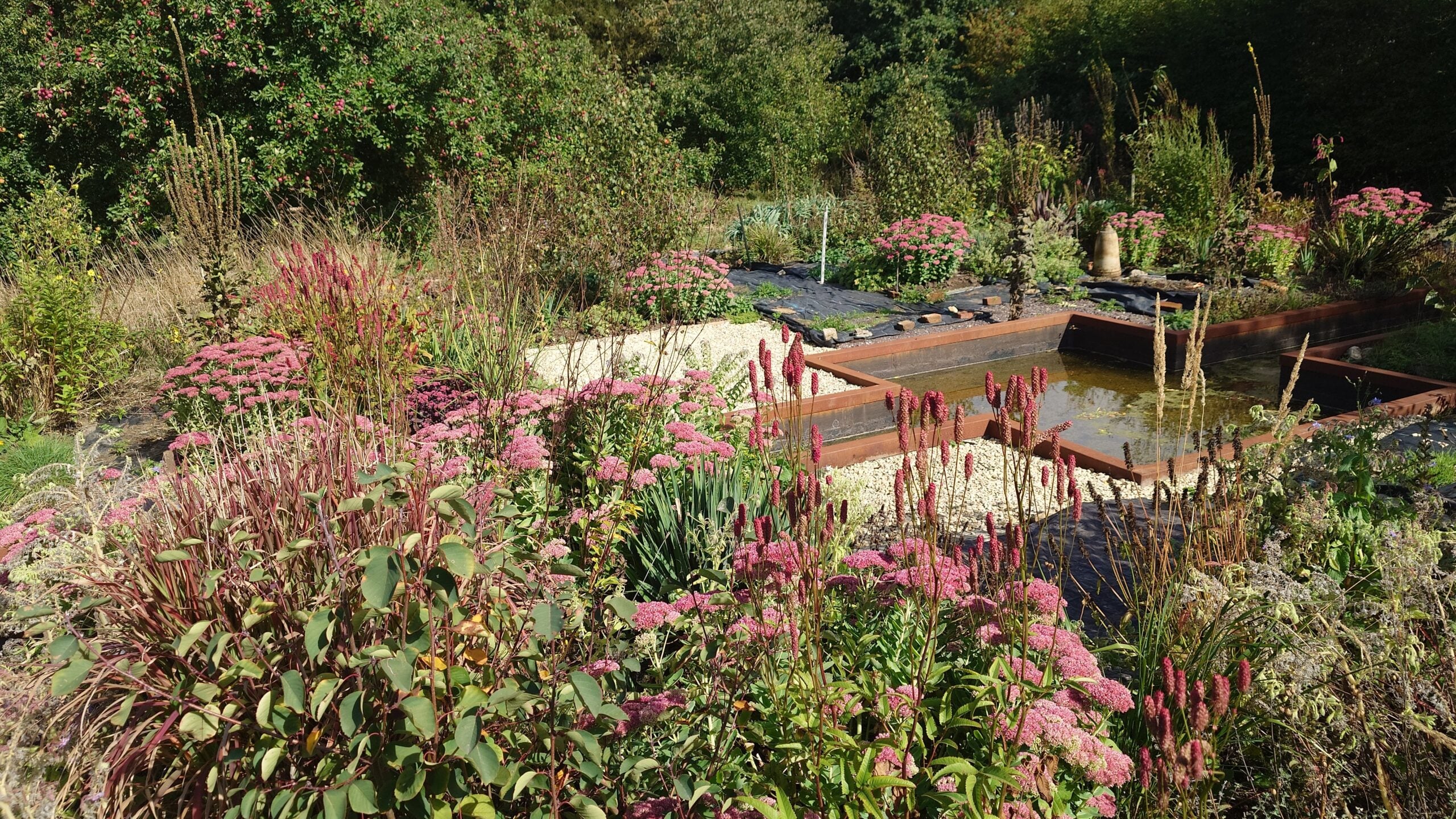
Managed organically with biodiversity at its core and climate change in mind, The Old Coach House in Templecombe, Somerset is bursting with wildlife. Owner, Sally Morgan, trials climate-resilient ideas: rainwater is channelled through ponds and rills, a dipping pond supplies water to the potager, and there are aggregate beds, unusual vegetables, half hardy ornamentals and a separate perennial vegetable garden. We asked Sally to tell us more…
My favourite time in the garden has to be when I sneak out with coffee mug in hand to sit in a secluded nook to listen, observe and note. It’s such an important part of my routine and makes all the long hours of gardening worthwhile. Just sitting and letting the garden wash over me is so relaxing and rejuvenating, and gives me the perfect boost for the rest of the day.
I’ll have my phone with me, not to receive calls but to take photos, make notes, and listen with my Merlin app to see what birds are around. We’re lucky to be surrounded by organic farmland and we have a great diversity of birds visiting the garden from the loud Cetti’s warblers and woodpeckers to stonechats and flocks of chattering long tailed tits. There are more song thrushes around too, which is great from a slug patrol point of view.
Photos are my way of recording what’s going on in the garden. Climate change is my main interest, and the garden has been designed to be resilient in the face of the changes, so recording what I see and when each year helps me to chart the seasons, compare years and make improvements.
-
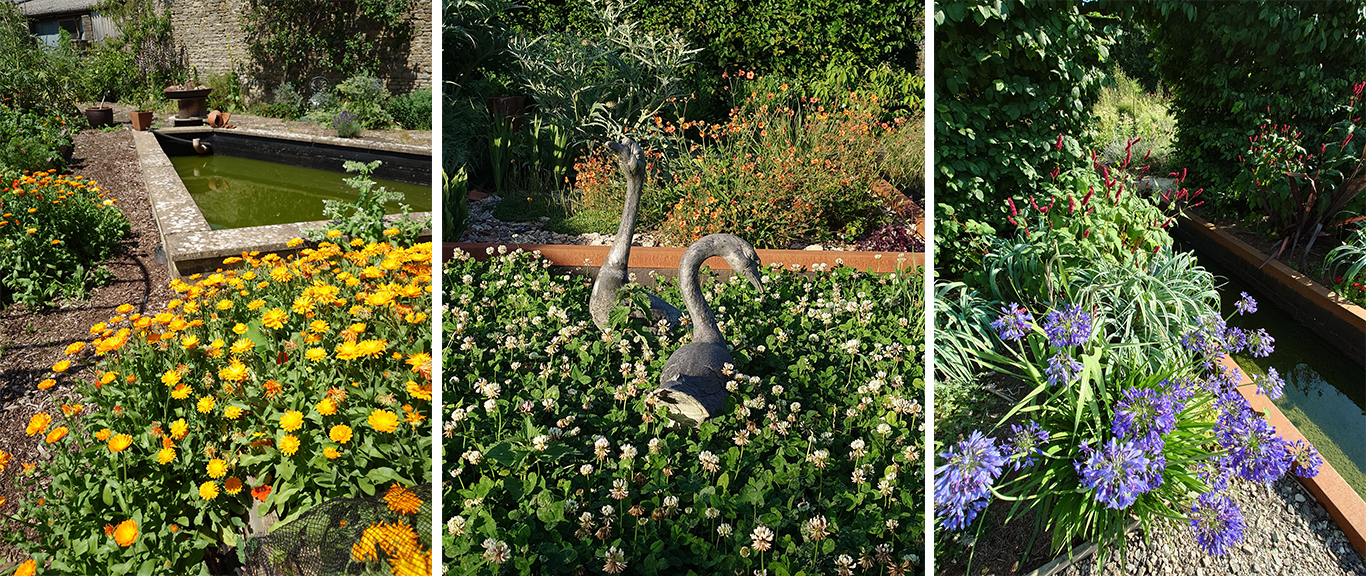
- Marigolds by the dipping pond, the clover lawn and shady planting by the rill
There is a lot of water in the garden, which is not only calming but has huge wildlife benefit. There is a formal set of connecting rills and ponds designed to carry water through the garden from the roofs of the house and barn to a ditch and from there a water meadow, helping to slow the flow of water back into the nearby stream and reduce flooding downstream. As well as being functional, the water is important for wildlife. Last year, tens of newts arrived in the garden during the breeding season, along with frogs and toads, while in summer there were several species of dragonfly and damselfly, and it was lovely to hear that ‘brrrr’ from the whirr of wings as the dragonflies patrolled the rill or had an interaction with one another. I provide them with perches along the rill so they can sit and watch, and I have a chance of photographing them!
I have smaller pools of water as well, some just containers of still water which provide valuable drinking water during the summer. And I have a few ‘stinky’ containers filled with rotting leaves to attract the drone fly, a type of hoverfly, that has aquatic larvae called rat-tailed maggots.
Soil, and the life that lives within it, is critical to the health of a garden. There is a critical interface between plant roots and soil called the rhizosphere and it’s here that the plant interacts with soil life. It’s amazing to think that a plant exudes as much as 40 per cent of its photosynthetic product from its roots to fed soil life and in return bacteria, fungi and other soil organisms supply the plant with nutrients. There is also a network of fungal hyphae running through the soil, connecting all the plants so it’s really important not to damage that, which means I rarely disturb soil unless it’s absolutely necessary.
My long term aim for this garden is to create a biodiversity hotspot, which I am trying to achieve in different ways. Firstly, I want to have as many different types of flowers open in the garden for as long as possible to provide food for pollinators and predators, especially early and late in the season. And secondly, I am trying to add complexity by having a mosaic of different habitats, each habitat attracting its own array of wildlife, and I achieve this by having different styles of planting from hedges and fruit trees, climbers, herbaceous beds, to gravel gardens, wood chip paths and vegetable beds. There are small features too, such as logs, piles of twigs, leaf litter, mini rock cairns, crevice gardens and more, which bring in insects, especially beetles.
It’s little things like this that we can all do to support the wildlife in our gardens. And once you have a good community of invertebrate animals like insects, birds, amphibians, reptiles and mammals soon follow.
The Old Coach House in Templecombe, Somerset is a garden to inspire. Visit when it opens on Saturday 1 August and Sunday 6 September. CLICK HERE for details.
10 Climate friendly actions
Don’t use peat
Don’t dig
Compost wastes + make your own potting compost
Slow, spread and sink water
Harvest water
Plant a hedge
Cover walls with plants
Plant trees and shrubs for shade
Improve biodiversity
Have lots of dead wood in the garden
-
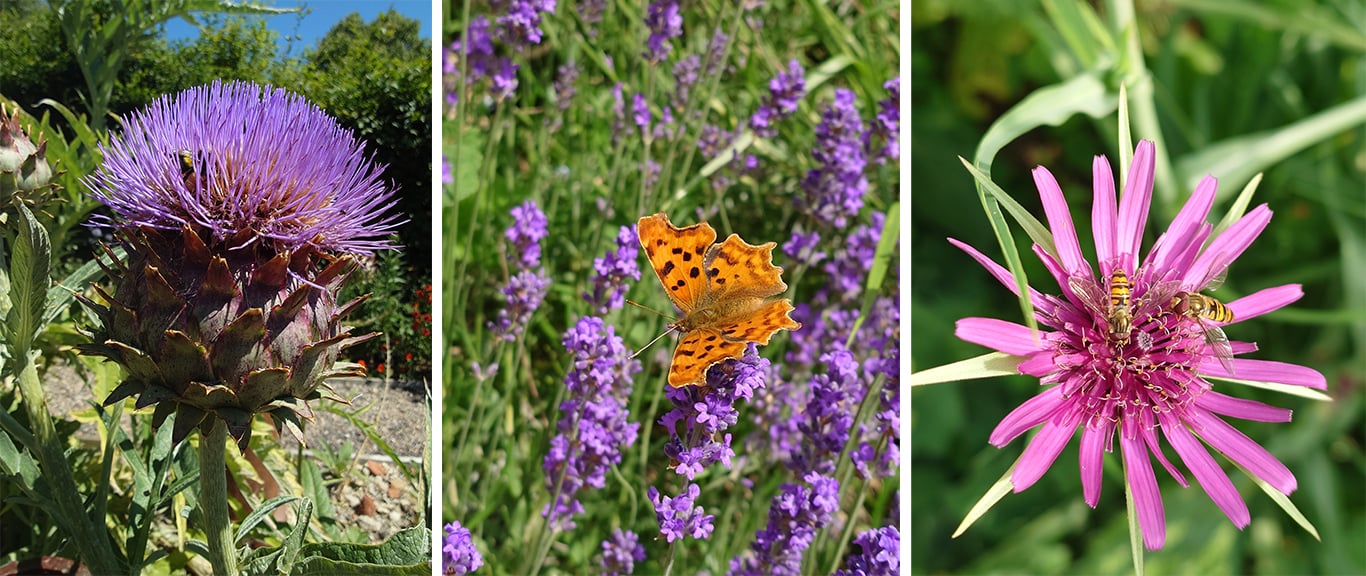
- Bees, butterflies and hover flies enjoying nectar rich planting
Recommended reads
The Resilient Garden and Allotment Handbook by Sally Morgan, Chelsea Green Publishing
The Climate Change Garden by Sally Morgan and Kim Stoddart, Quarto
Rebugging the Planet, The Remarkable Things that Insects (and Other Invertebrates) Do – And Why We Need to Love Them More, by Vicky Hird, Chelsea Green
The Climate Change Resilient Vegetable Garden, by Kim Stoddart, Quarto
The Old Coach House in Templecombe, Somerset is a garden to inspire. Visit when it opens on Saturday 1 August and Sunday 6 September. CLICK HERE for details.
This article first appeared in the 2026 edition of The Little Yellow Book of Gardens and Health – you can read it here