


In Nature’s Slipstream with garden owner Carol Bruce
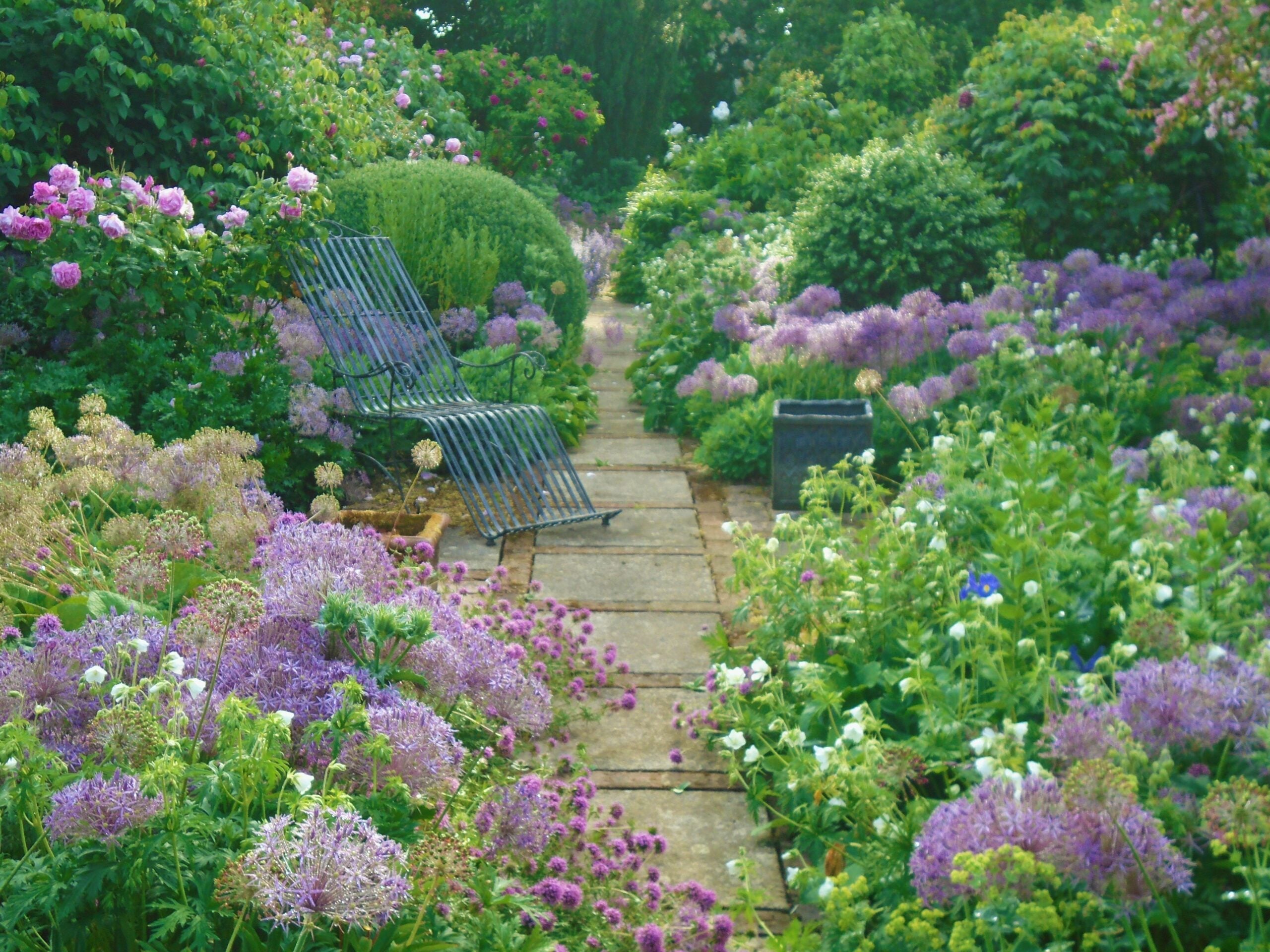
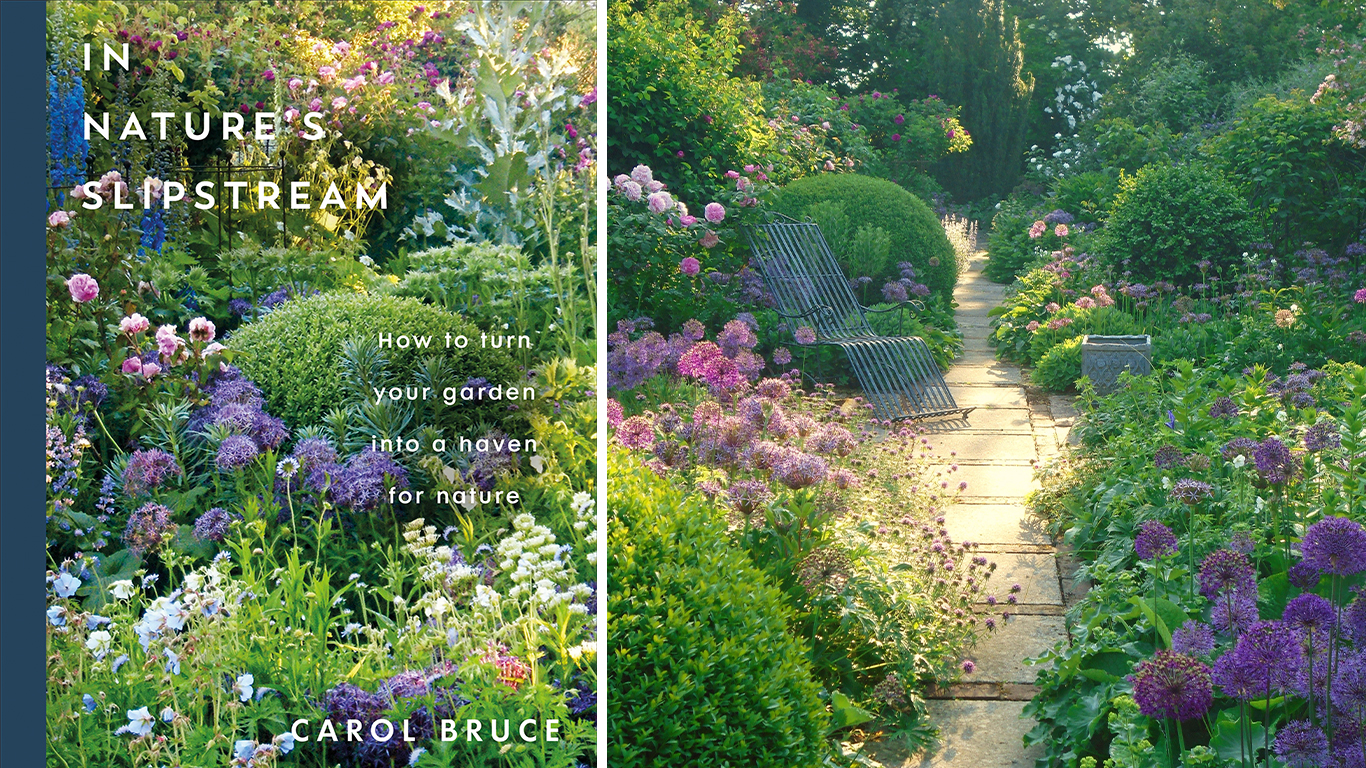
A self-taught gardener, Carol Bruce has been opening her beautiful garden at Old Bladbean Stud in Kent for the National Garden Scheme since 2012. Designed from scratch, the now award-winning garden harnesses self-sowing and natural selection for resilience, is free from irrigation, pesticides, and fertilisers, and acts as a haven for wildlife. Having worked through all the trial and error herself, her new book In Nature’s Slipstream published by DK shares her knowledge, proven techniques, and planting schemes to give others a shortcut to transforming their own space – whether starting from scratch or with a garden to adapt.
We caught up with Carol to find out more about her garden and the inspiration behind her new book.
Q: Why and when did you first decide to create a garden at Old Bladbean Stud?
I have had a head full of imaginary gardens ever since I can remember, so I was born to make a garden in the same way that beavers are born to build dams! Rather than deciding to make a garden it was more a case of steering my life to a point where I could recreate some of those imaginary gardens on the ground, and when I moved to Old Bladbean Stud in 2003 I seized the chance with both hands.
Q: Was there an existing garden or did you start from scratch?
The site was abandoned ground covered in thistles, nettles and sycamore saplings when I took it over, which was very liberating as it gave me a completely blank canvas to work with. The first thing I did was to divide it into a sequence of separate spaces on paper, with a route connecting them so that the finished garden would have a coherent overall structure and a clear sense of journey, and then I worked my way across the site designing and creating one garden area at a time, starting with the rose garden in 2003 and finishing with the mirrored borders in 2009.
Q: Had you created a garden before?
This was my first attempt – I had a little gardening experience from helping out in our small family garden as a child, but I love the spirit of adventure and the coalface of discovery that come with learning by doing and working things out by trial and error, so I really relished my lack of knowledge and experience. The site and I were effectively blank canvases together and this gave me the opportunity to work out my own nature-first gardening philosophy, landscape inspired design techniques and ecological maintenance methods so they could all work together as a holistic system.
Q: Who or what inspired you to garden?
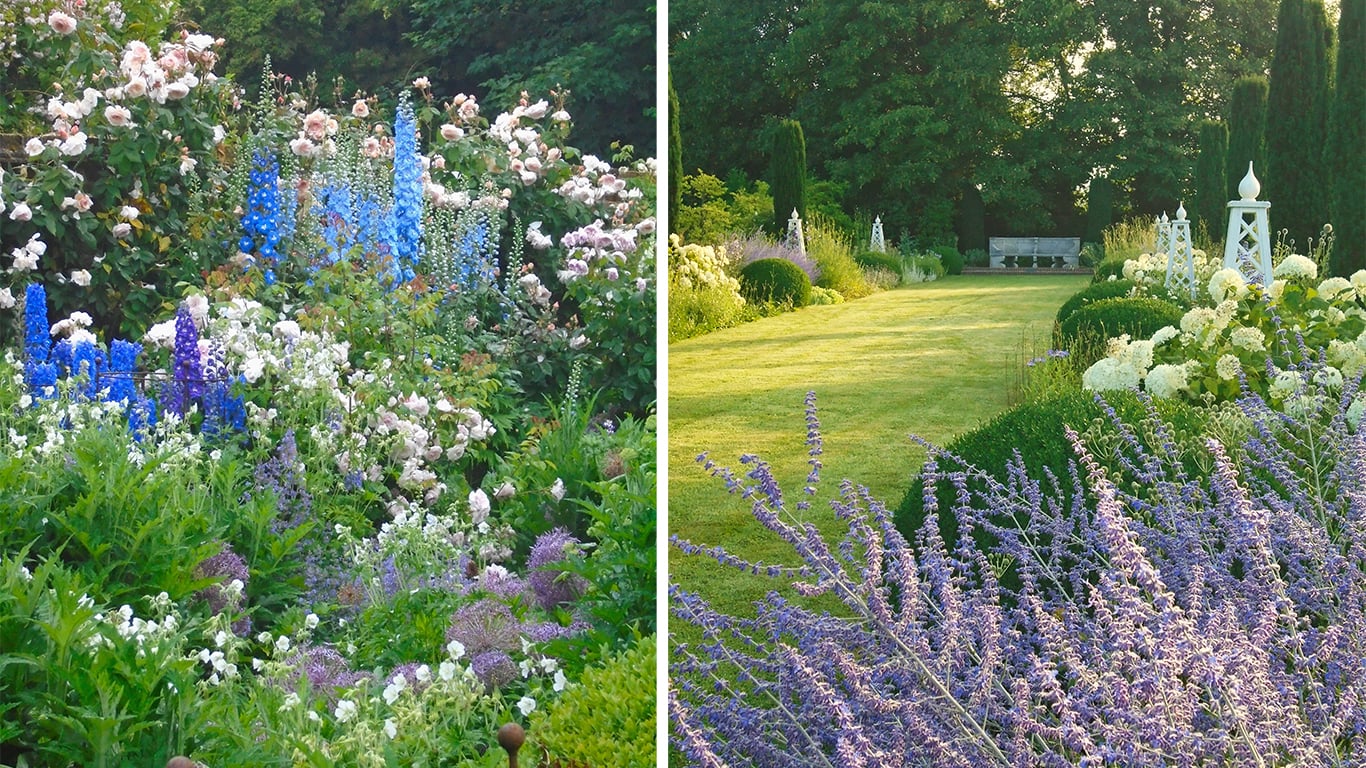
I think the drive to find a patch of land and decide what grows there is an instinct, and it just happens to be exceptionally strong in me. I was very keen to allow that instinct to be in the driving seat so I restricted my inspiration to the landscapes and cycles of life in the surrounding countryside. It was important to me that the character of my garden should reflect its innate, archetypal origin rather than be the product of culture or fashion, and it has a distinctive otherworldly beauty as a result.
Q: Did you have a plan in mind or did it evolve over time?
I always start a project with meticulous and rigorous planning – it is the only way I can be sure that I am devoting the days of my life to something that will work on the ground.
For each area of the garden I spent about 4 months at the planning stage and produced detailed scale layout and planting plans. Creating the actual garden was then just a case of slotting the components into place using the scale plans like the box lid of a jigsaw puzzle, as all the complicated and creative decisions had already been made at the kitchen table.
Q: Natural processes, including welcoming wildlife, are important to you – why? Were they part of the garden plan from the start?
Everything I do in life is an act of reverence for nature and my goal from the start was to bring artistry, sustainability and resilience onto the same page by designing a garden that would incorporate natural processes rather than fight against them. Superficial re-wilding techniques that are bolted onto traditionally cultivated gardens often just end up looking scruffy and neglected, so instead I came in from the wild side and changed as little as possible to create an environment that looks like a romantic English country garden, but functions according to natural systems.
Just like a wild place my garden has genetically diverse populations of self-sowing perennial species that are allowed to evolve in lockstep with the changing climate, while my design techniques counterbalance this with the reassuring evidence of a human hand.
As a result, the garden functions as an ornamental ecosystem with a complete and balanced food chain just like the surrounding countryside, and even the plants themselves benefit in ways not possible in traditionally managed gardens: without my army of shrews to eat the slugs I would have no delphiniums!
Q: What made you decide to open for the National Garden Scheme?
Initially it was to satisfy curiosity about what on earth I was doing behind the wall! So many people were asking to see the garden that I decided it would be a good way to welcome anyone who wanted to come and have a look, but National Garden Scheme supporters were a revelation to me – I had no idea there were so many like-minded and supportive people in the world until I opened the garden!
Q: Do you enjoy opening for the Scheme?
I love it – working away in the garden day in day out all year round on my own is an absolute joy, but I am so close to it that I really can’t see the garden in the same way as the visitors do. Welcoming them into my self-sufficient little world shines a light on the garden and what I do from a completely different angle, and it is very rewarding to see how much joy and inspiration it brings to them.
Q: When and how did the idea of In Nature’s Slipstream come about?
It really came about as a result of talking to National Garden Scheme visitors on open days. Over the years I realised that they were all asking very similar questions, and that a book would be the perfect way to share my work here with other gardeners and enable them to apply my gardening philosophy, design and maintenance methods and planting schemes at home.
Q: How would you describe the book?
The book is just like a seed pod from my garden – a little capsule of potential that contains everything it needs to grow into a whole new ornamental ecosystem when it falls into another gardener’s hands.
Let In Nature’s Slipstream published by DK act as your personal gardening tutor, helping you to achieve a beautiful, manageable garden that is completely in harmony with the natural world.
Carol’s garden, Old Bladbean Stud in Kent opens for the National Garden Scheme on dates in May, June and July.
For details CLICK HERE